Chapter 5
Chapter 5 - Full | VS-AUD-Ch5-Full (24 min 33 sec) |
The Mandates Continue: The Inner Battle
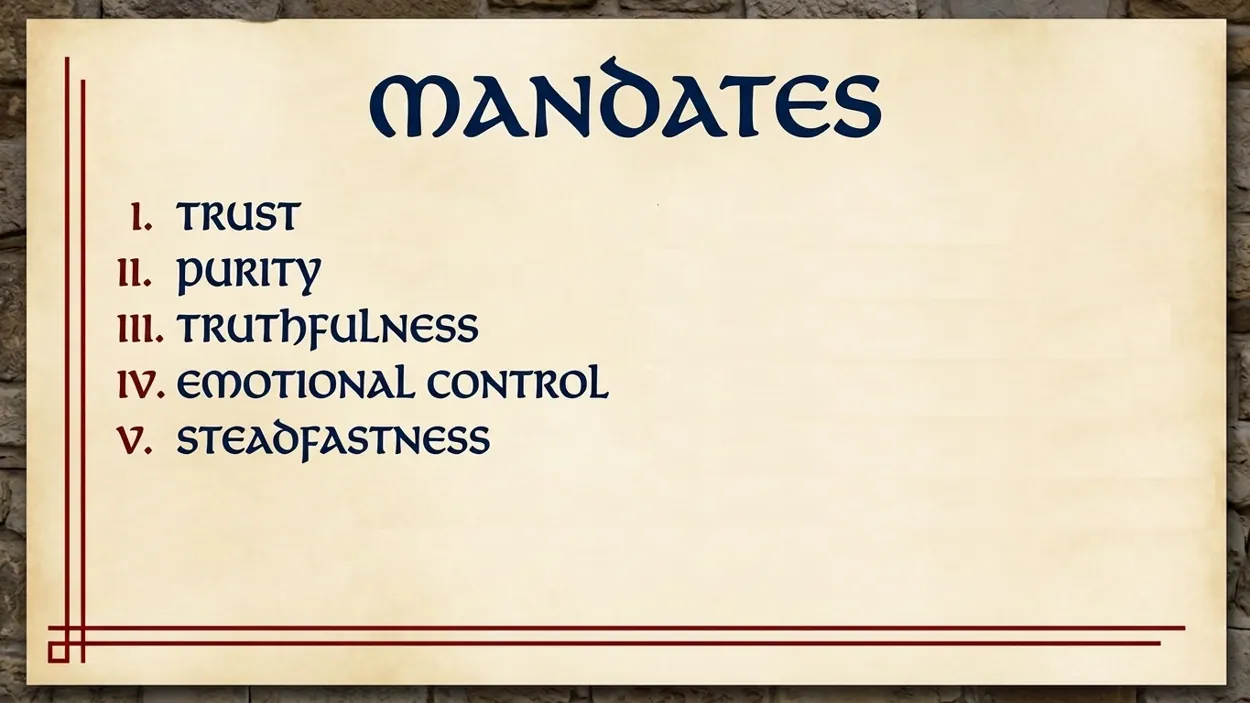
The Fifth Commandment: Steadfastness
VS-AUD-Nancy-Ch5a |
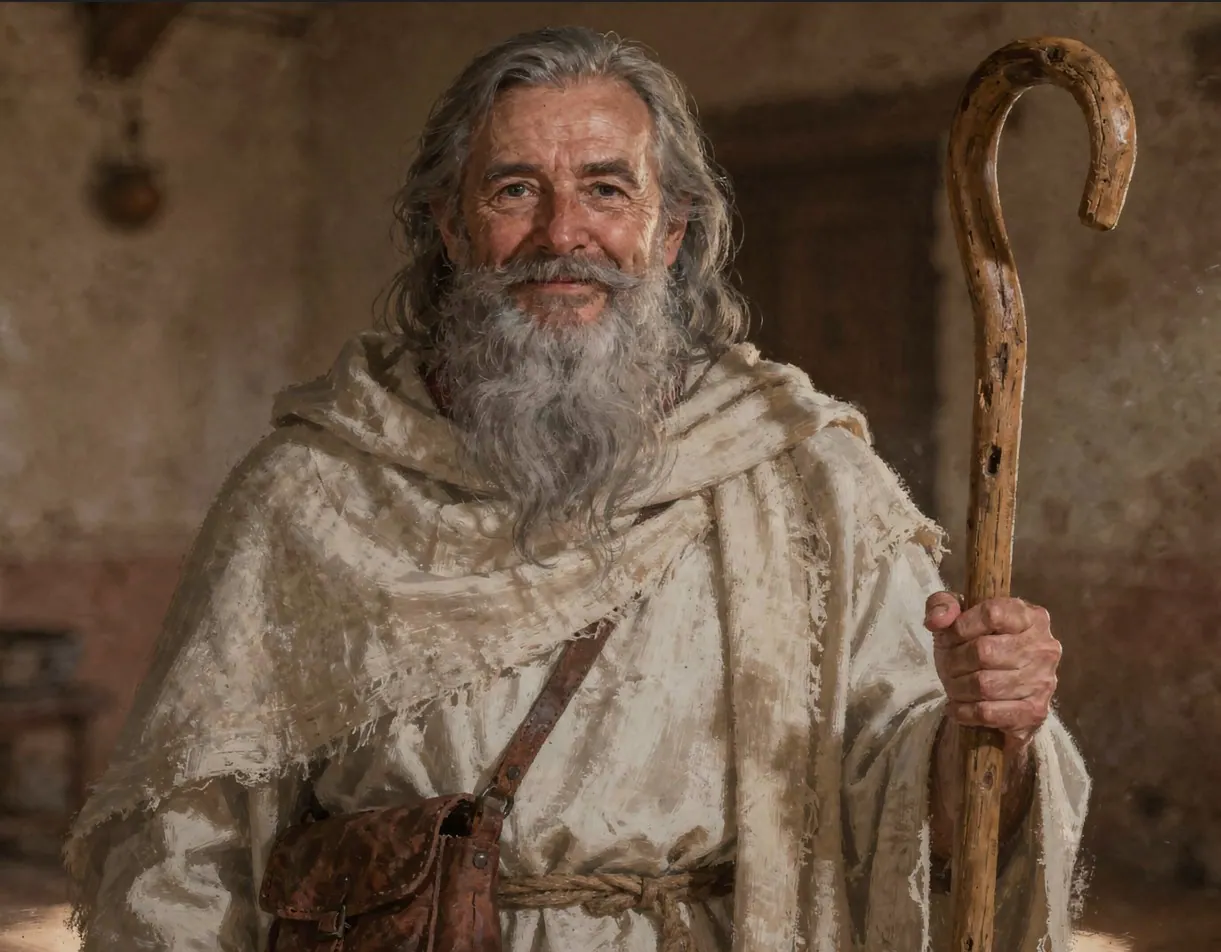
The next day, the shepherd speaks of steadfastness — the quiet strength that holds firm when storms rise. They walk along a narrow ridge path, the morning light stretching long shadows across the ground. Hermas feels the cool air settle around them, calm and steady, as though the day itself is teaching him what the shepherd is about to say.
“Do not drift,” the shepherd says. His voice is firm, but not harsh. “Do not waver. Stand.”
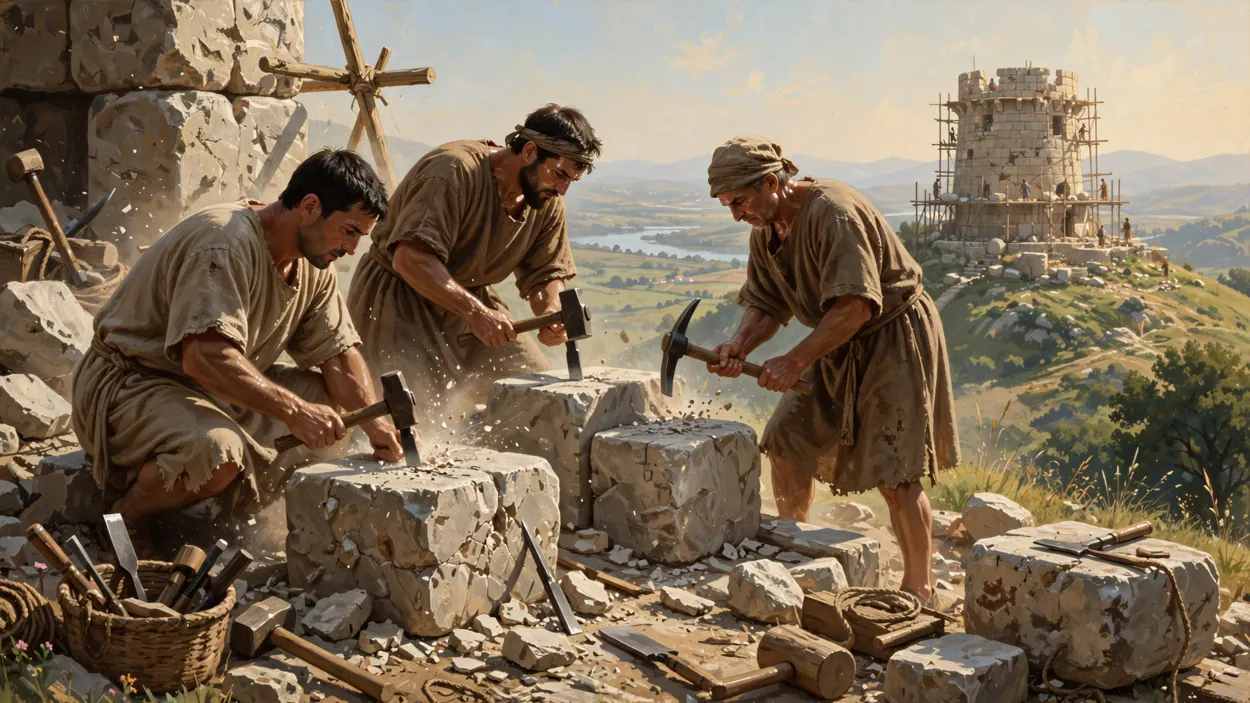
Hermas feels something settle inside him. He has wavered many times — pulled by fear, shaken by uncertainty, weakened by doubt. But now, with the shepherd beside him, he feels anchored. The path ahead no longer shifts beneath his feet. It feels solid, like a stone placed firmly into the tower.
The shepherd continues walking, his staff tapping lightly against the earth. “Steadfastness is not stubbornness,” he says. “Stubbornness resists truth. Steadfastness stands with it. When you have learned the truth, that's when you remain steadfast. While truth is still the inquiry, do not be stubborn to resist it when it becomes clear."
Steadfastness when you know the truth;
Stubbornness when you resist the truth.
Hermas listens closely.
“Stubbornness is pride,” the shepherd says. “It refuses correction. It clings to its own way even when that way is broken. But steadfastness is strength. It holds to what is right. It endures. It remains.”
Hermas breathes in slowly, letting the distinction take root. He feels the difference clearly now — one posture hardens the heart, the other strengthens it.
“I will write it,” Hermas says.
“And you will live it,” the shepherd replies.
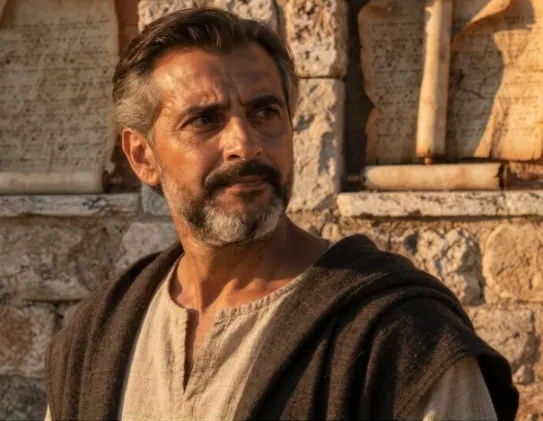
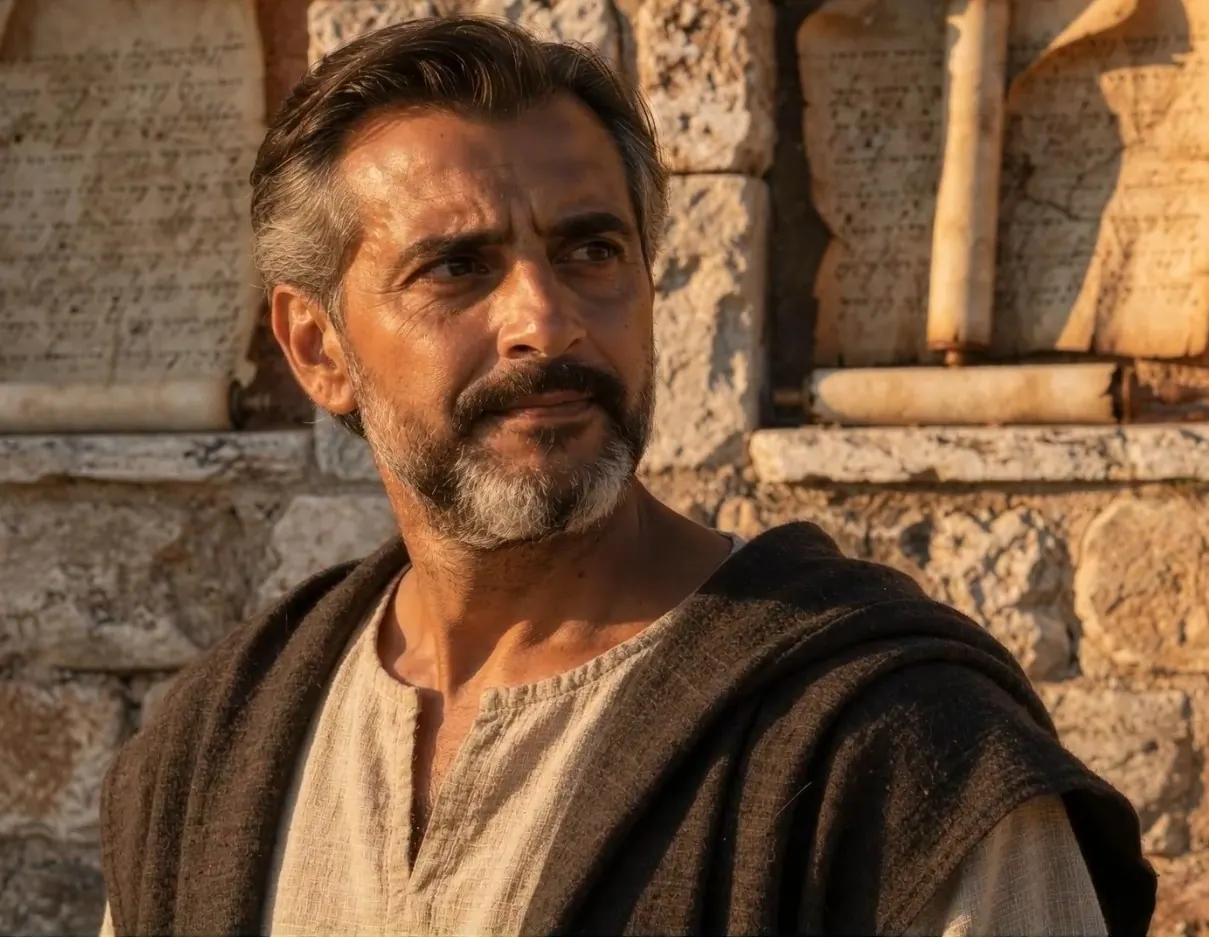
Back at home by the fireplace, Hermas takes out his parchment. The fire crackles in the background, it is quiet outside. He writes as the shepherd watches — each stroke deliberate, each word carrying the weight of endurance, the weight of the tower, the weight of what the church must become.
Stand. Do not drift. Do not waver. Be steadfast with the truth, not stubborn against truth.
The fifth mandate takes shape beneath his hand.
The Sixth Commandment: Discernment
VS-AUD-Nancy-Ch5b |
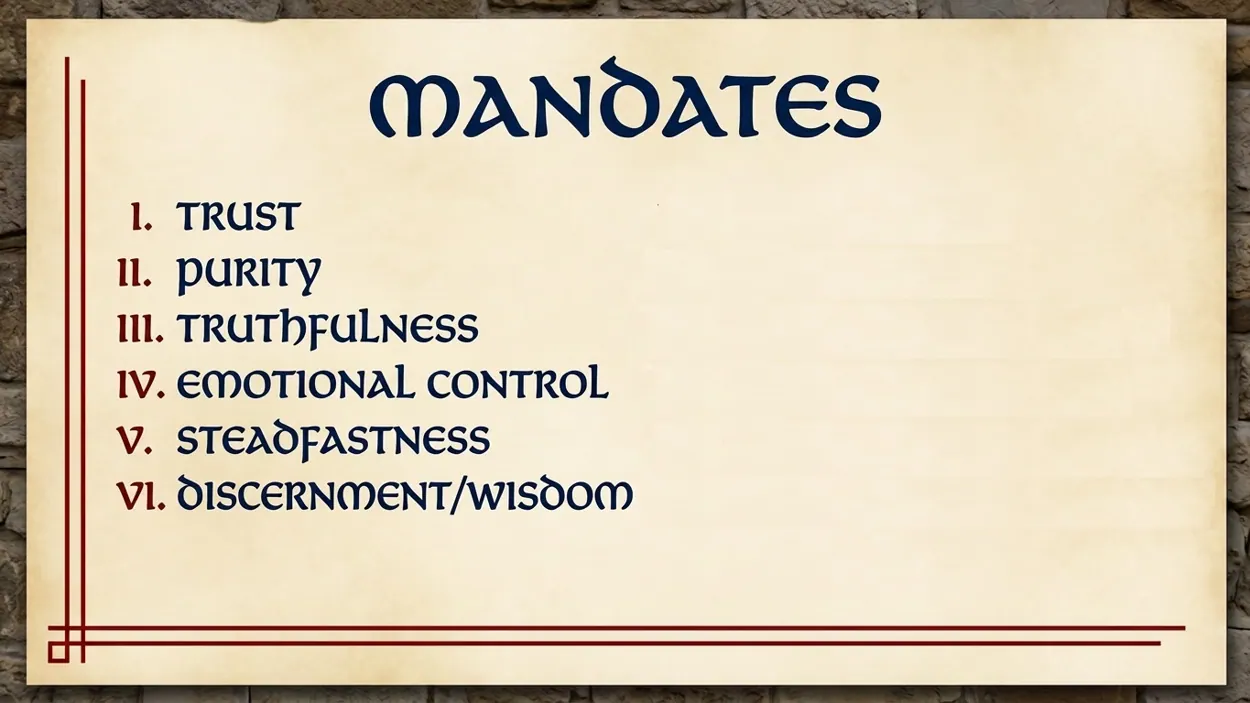
They walk through the fields as the shepherd explains discernment — the ability to recognize true spirits from false ones. The wheat sways in long golden waves, brushing against Hermas’s hands as he moves. It reminds him of the story of Ruth in the Bible when she was gleaning the left over barley in the fields. The air is warm, the sky wide, and the quiet of the fields makes the shepherd’s words feel heavier.
The shepherd begins.
“Not every voice is from God,
Not every message is pure.
And not every word is wise.”
Hermas listens carefully. This commandment feels heavier than the others — not because it is harsh, but because it is subtle. Trust, purity, truthfulness, emotional control, steadfastness — these are things he can see in himself. But discernment reaches beyond him. It asks him to judge what comes from outside, what approaches him, what speaks to him.
The shepherd continues, his tone steady.
“Some spirits encourage. Some deceive.
Some spirits strengthen. Some weaken.
You must learn the difference.”
Hermas nods slowly, feeling the seriousness of it. He remembers moments when he felt pulled by voices he could not name — fear, doubt, pride, hope. He wonders now which of those voices were true and which were false.
“You must test what you hear,” the shepherd says. “And teach others to do the same.”
Hermas feels the weight of that responsibility settle on him. This is not just about his own safety. It is about the church — the tower — the people who will read his words and depend on them.
“I will write it plainly,” Hermas says.
The shepherd nods. “Good. Discernment protects the tower.”
The fields are quiet around them, the wheat whispering in the wind.
Back at home he sits at his table with the parchment spread out. There are sounds of children playing outside. He takes out his parchment, reaches for his quill pen then stops. He listens for a moment to the voices of the children. Which are pure? Which are wise? Can he tell? He writes as the shepherd watches — each stroke deliberate, each word carrying the weight of wisdom, the weight of vigilance, the weight of what the church must learn to recognize.
Test the spirits. Listen carefully. Discern what is true.
The sixth mandate takes shape beneath his hand.
The Seventh Commandment: Holy Reverence Toward God
VS-AUD-Nancy-Ch5c |
Hermas walks with the shepherd along the quiet path that winds toward the hills. The air is still, and even the birds seem to hold their breath. The path feels different today — not heavier, but holier, as though the ground itself knows what the shepherd is about to say.
The shepherd stops and looks at him with a seriousness Hermas has not seen before.
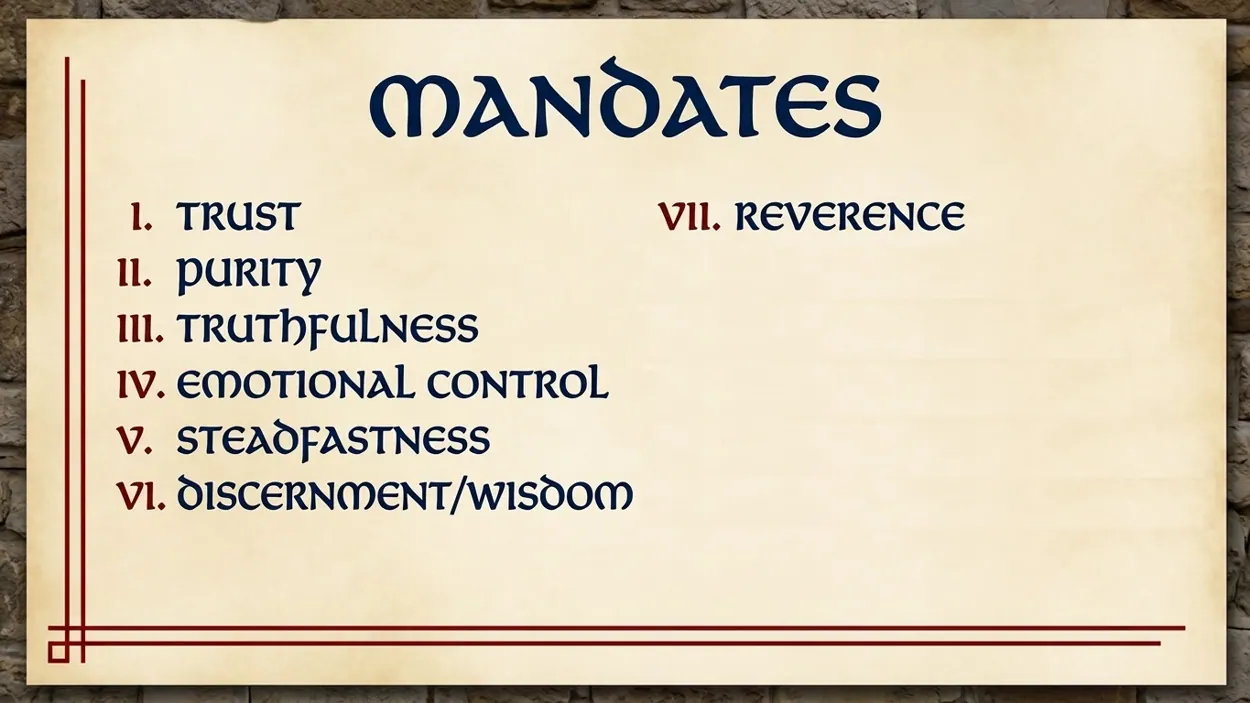
“Fear God,” he says. “Not with terror, but with awe. Have a sincere reverence toward God.”
Hermas feels the weight of the words settle into him. They do not frighten him. They steady him. They clear the air around him like a wind sweeping through a crowded room.
“When you fear God rightly,” the shepherd continues, “you will fear nothing else. Not men. Not trials. Not the future.”
Hermas nods slowly. He has feared many things — judgment, failure, the unknown path ahead. But this fear, this holy reverence, feels different. It feels like strength. It feels like standing in the presence of something so good, so pure, so powerful that all lesser fears fall away.
The shepherd’s voice softens. “Reverence orders the heart. It gives weight to what matters. It clears away what does not.”
Hermas breathes in, steady and slow.
“I will write it,” he says.
“And you will live it,” the shepherd replies.
Back in his home, his wife has just finished preparing a meal but she waits. With the aroma of fresh bread wafting through the air, Hermas takes out his parchment. He must write now as the shepherd watches — each stroke deliberate, each word carrying the weight of awe, the weight of obedience, the weight of what it means to stand before an almighty God with fear that produces holy reverence with a whole heart.
Reverence. Awe. Fear that strengthens, not frightens.
The seventh mandate takes shape beneath his hand.

The Eighth Commandment: SelfControl
VS-AUD-Nancy-Ch5d |
They stroll again, side by side, Hermas and the shepherd. The path opens into a clearing where the wind moves gently through the tall grass. The shepherd sits on a smooth stone and motions for Hermas to sit beside him.
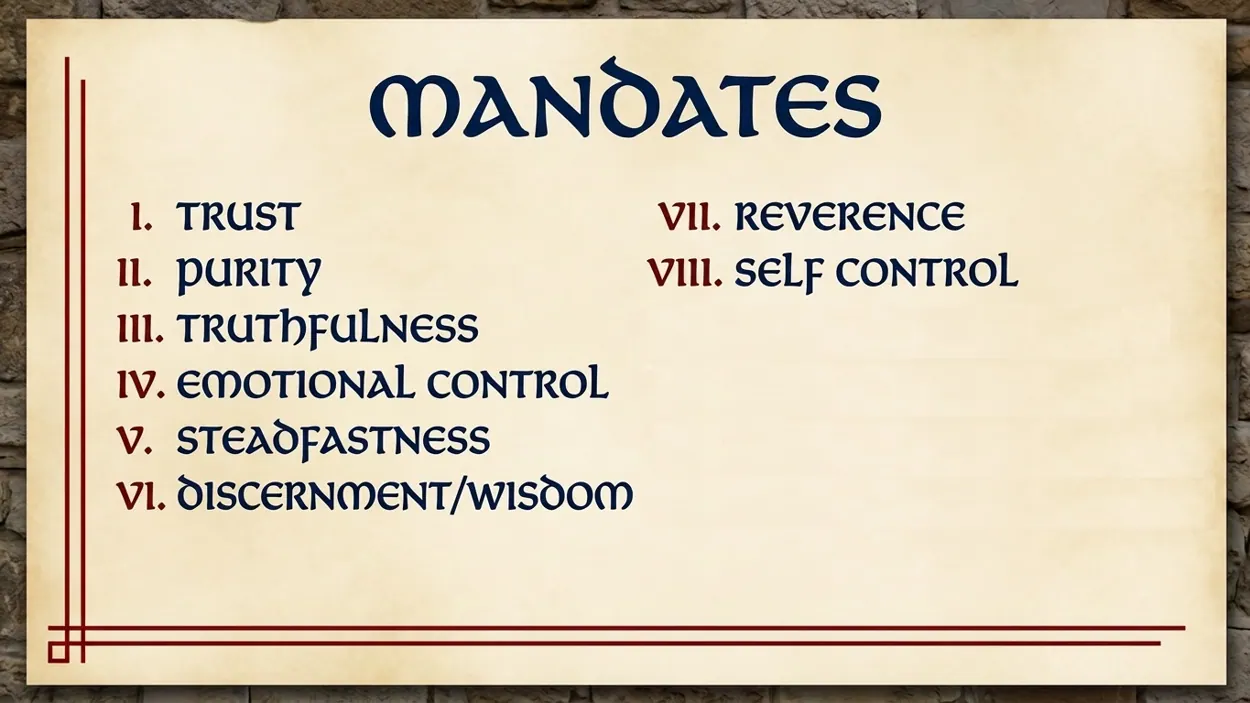
“Selfcontrol,” he says, “is the guardian of the soul.”
Hermas listens closely. The shepherd speaks of discipline — not harshness, but steadiness. The kind of strength that keeps a person upright when temptations press hard, when old habits whisper, when the heart feels pulled in two directions at once.
“Without selfcontrol,” the shepherd says, “the heart becomes divided. But with it, the whole person becomes strong.
Selfcontrol is the true test of a person’s character.”
Hermas feels the truth of it. He has known moments of weakness. He has known the pull of old habits. But now he feels the call to something higher — a steadiness that does not break, a discipline that does not waver.
“I will write this carefully,” Hermas says.
“Good,” the shepherd answers. “Many will depend on it.”
Back in his home, Hermas steps inside as the last light of day settles across the doorway. His wife has just finished preparing a meal, but she waits, sensing the importance of the moment. The aroma of fresh bread fills the room, warm and grounding.
Hermas moves to his table — the same place where each mandate has taken shape — and sits. The shepherd’s words still resonate in his ears, steady and clear.
Hermas takes out his parchment.
He must write now, while the meaning is sharp, while the call to discipline is still strong, while the shepherd’s instruction still echoes in his chest.
Each stroke is deliberate. Each word carries the weight of vigilance, the weight of steadiness, the weight of what it means to guard the soul with a whole heart.
Selfcontrol strengthens.
Selfcontrol steadies.
Selfcontrol protects.
The eighth mandate settles onto the page.
The Ninth Commandment: Confidence in God
VS-AUD-Nancy-Ch5e |
They walk again, this time toward the riverbank. The water moves steadily, unhurried, sure of its path. Hermas watches it flow, quiet and constant. The shepherd points to it.
“Confidence in God is like this river,” he says. “Steady. Certain. Unwavering.”
Hermas studies the water. He understands. Confidence is not loud. It is not proud. It is quiet strength — the kind that holds firm when everything else shakes, when fear rises, when the future feels uncertain.
“Do not doubt,” the shepherd says. “Doubt is the enemy of faith.”
Hermas breathes deeply. The river’s calm seems to settle into him.
“I will write it plainly,” he says.
The shepherd nods. “Plain truth is powerful.”
Back in his home, Hermas enters to find his wife tending a small clay lamp. She adjusts the wick, coaxing the flame to rise. The soft glow spreads across the room, warm and steady — like the river’s flow still lingering in Hermas’s mind.
A pot simmers quietly near the hearth, releasing the aroma of lentils and herbs. His wife glances at him, reading the seriousness in his face, and steps aside to give him space.
The house feels peaceful tonight, lit by a single flame that refuses to flicker.
Hermas sits at his table.
He takes out his parchment, the lamplight reflecting off its surface. The shepherd’s words settle in him again — confidence that steadies, confidence that strengthens, confidence that silences doubt.
He must write now, while the river’s image is still clear, while the flame beside him burns as steady as the little flame in the small clay lamp on the table. While his heart is anchored enough to speak plainly.
Each stroke is deliberate. Each word carries the weight of trust, the weight of certainty, the weight of what it means to place confidence in God with a whole heart.
Confidence steadies.
Confidence strengthens.
Confidence endures.
The ninth mandate settles onto the page.
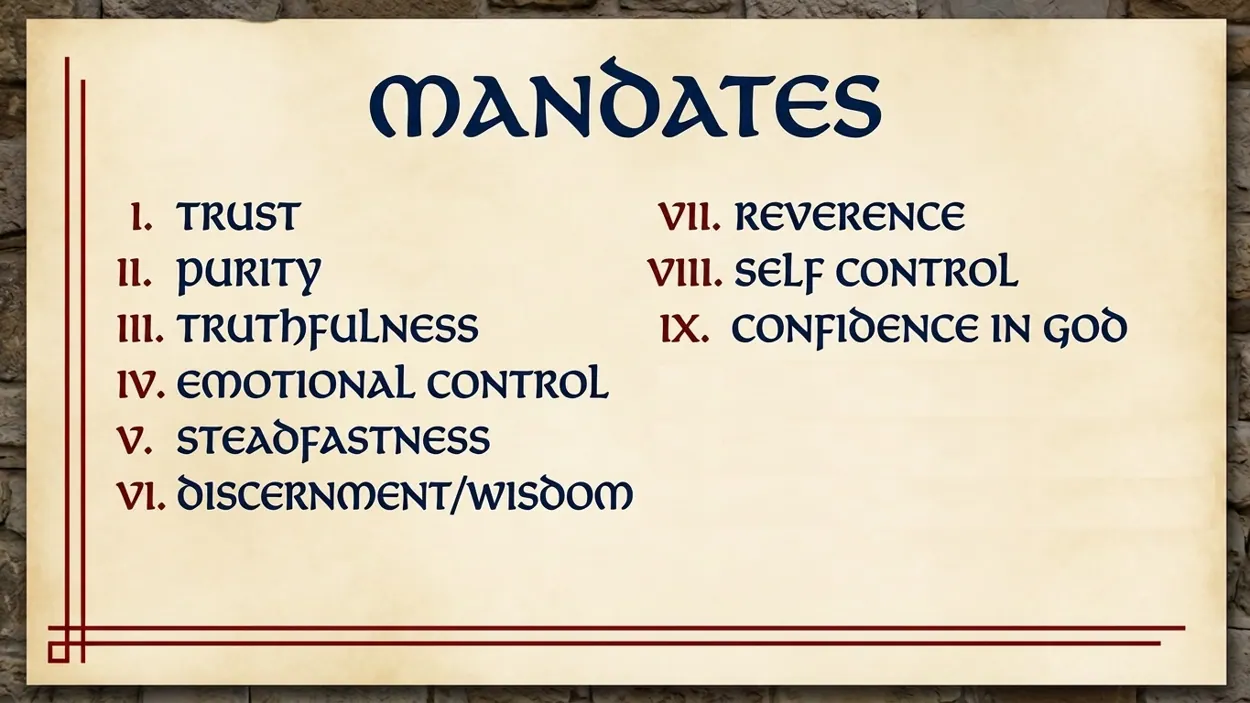
The Tenth Commandment: Sadness and Joy
VS-AUD-Nancy-Ch5f |
They sit beneath a willow tree near the river. Its long branches sway gently, trailing their tips across the surface of the water. The shepherd’s tone softens,
matching the quiet of the place.
“Sadness,” he says, “crushes the spirit. It weakens the heart. It drives away strength.”
Hermas feels the sting of recognition. He has known sadness — deep, heavy sadness that settles like a stone in the chest, sadness that dims the world and steals breath.
“But joy,” the shepherd continues, “is life. Joy strengthens. Joy heals. Joy lifts the soul toward God.”
Hermas listens closely.
“Joy is not happiness, Hermas. Happiness comes and goes with circumstances. Joy is a steady sense that all is well because God is in control. Find that kind of joy, Hermas, and you will remain faithful.”
Hermas feels something warm rise within him. Joy has been rare in his life — fleeting, fragile. But now, with the shepherd beside him, he feels it growing, like a small flame catching light.
“I will write this one with care,” he says.
“Write it with hope,” the shepherd replies.
Back home, Hermas steps inside to find his wife humming softly as she arranges fresh figs in a clay bowl. A small breeze moves through the open window, carrying the scent of river reeds and cool evening air.
The house feels lighter tonight — not solemn, not heavy, but gently bright.
His wife glances at him, sees the warmth in his expression, and smiles without speaking. She sets the bowl on the table and quietly moves to tidy the corner of the room, giving him space.
A single candle burns near the window, its flame steady and warm, casting soft light across the table where Hermas writes each mandate.
Tonight, the house feels ready for joy.
Hermas sits at his table.
He takes out his parchment, the candlelight reflecting off its surface. The shepherd’s words settle in him again — sadness that crushes, joy that strengthens, joy that heals, joy that lifts the soul toward God.
He must write now, while the warmth is still rising in him, while hope is still fresh, while the shepherd’s instruction still echoes beneath the willow’s branches.
Each stroke is gentle but sure. Each word carries the weight of healing, the weight of hope, the weight of what it means to find joy because God is in control.
Sadness weakens.
Joy strengthens.
Joy endures.
The tenth mandate finds its way onto the page.
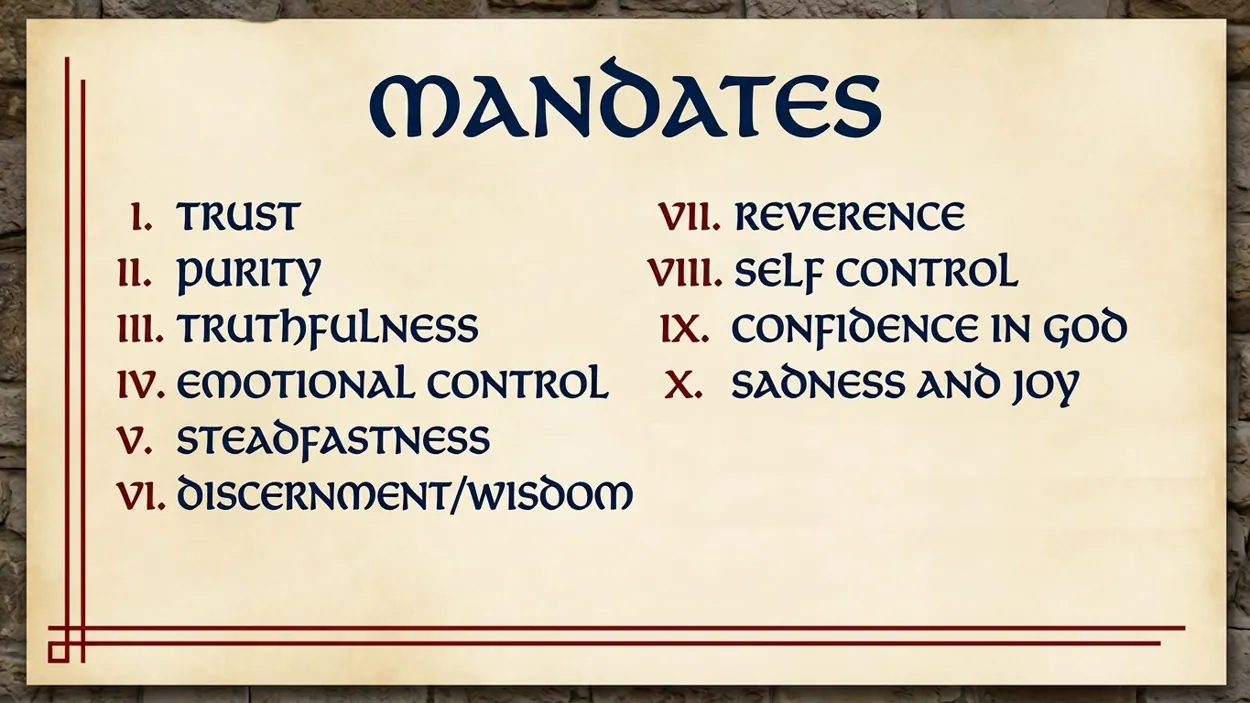
The Eleventh Commandment: Discernment of Spirits
VS-AUD-Nancy-Ch5g |
They walk into the shade of the olive trees. The branches sway lightly overhead, scattering shifting patterns of sunlight across the ground. The shepherd’s voice grows firm again, carrying a weight Hermas has learned to recognize — the weight of warning.
“There are true prophets,” he says, “and false prophets.”
Hermas feels a chill. This commandment is heavier than the rest — not because it is complicated, but because it is dangerous. The shepherd’s tone makes that danger unmistakable.
“You must learn to discern spiritually between people,” the shepherd continues.
“The true prophet speaks with humility.
The false prophet speaks with pride.
The true prophet leads toward righteousness.
The false prophet leads toward confusion.”
Hermas listens carefully. This is not just instruction. It is protection — for him, and for the church.
The shepherd pauses, then adds something Hermas did not expect.
“This discernment,” he says, “is not the same as the discernment I taught you earlier.”
Hermas leans in.
“In 6th Mandate,” the shepherd says, “you learned to test your inner voices, the impulses, the unseen influences that whisper to the heart. That discernment guards your soul.
It is the voice of wisdom
instead of foolishness.
It is the voice of experience
instead of rashness.”
Compare these two kinds of discernment, Hermas. This new one discerns between people, those claiming to be prophets in the church; and the earlier one discerns between your inner thoughts and desires, that is how you make your personal decisions.
He gestures toward the grove around them.
“So remember, the discernment I speak about this time guards the church. It is about people — those who claim to speak for God. Some are true. Some are false. And the false can destroy many.”
Hermas feels the weight of the distinction settle into him. The first discernment protects the inner life. This second protects the community.
“I will write it clearly,” Hermas says.
“Clarity saves,” the shepherd answers.
Back in his home, Hermas steps inside to find his wife grinding barley with a small stone mortar. The rhythmic sound fills the room — steady, grinding. She looks up when he enters, sees the seriousness in his face, and quietly sets the mortar aside.
She opens the shutters, letting in the cool night air. A lantern hangs from a wooden beam, its flame bright and unwavering. The room feels sharper tonight — not warm, not soft, but clear. The kind of clarity the shepherd demanded.
Hermas walks to his table. His wife places a small cup of water beside him, then returns to her work, giving him space.
The house feels watchful, as though it understands the seriousness of what must be written.
Hermas sits at his table.
He takes out his parchment, the lantern’s light falling across it in a clean, bright line. The shepherd’s words settle in him again — humility versus pride, righteousness versus confusion, truth versus deception.
He must write now, while the warning is still sharp, while the oliveshade seriousness still rests in his chest, while clarity is still strong enough to guide his hand.
Each stroke is precise. Each word carries the weight of vigilance, the weight of protection, the weight of what it means to guard the church from false voices.
True prophets are humble.
False prophets exalt themselves.
Discernment saves.
The eleventh mandate settles onto the page.
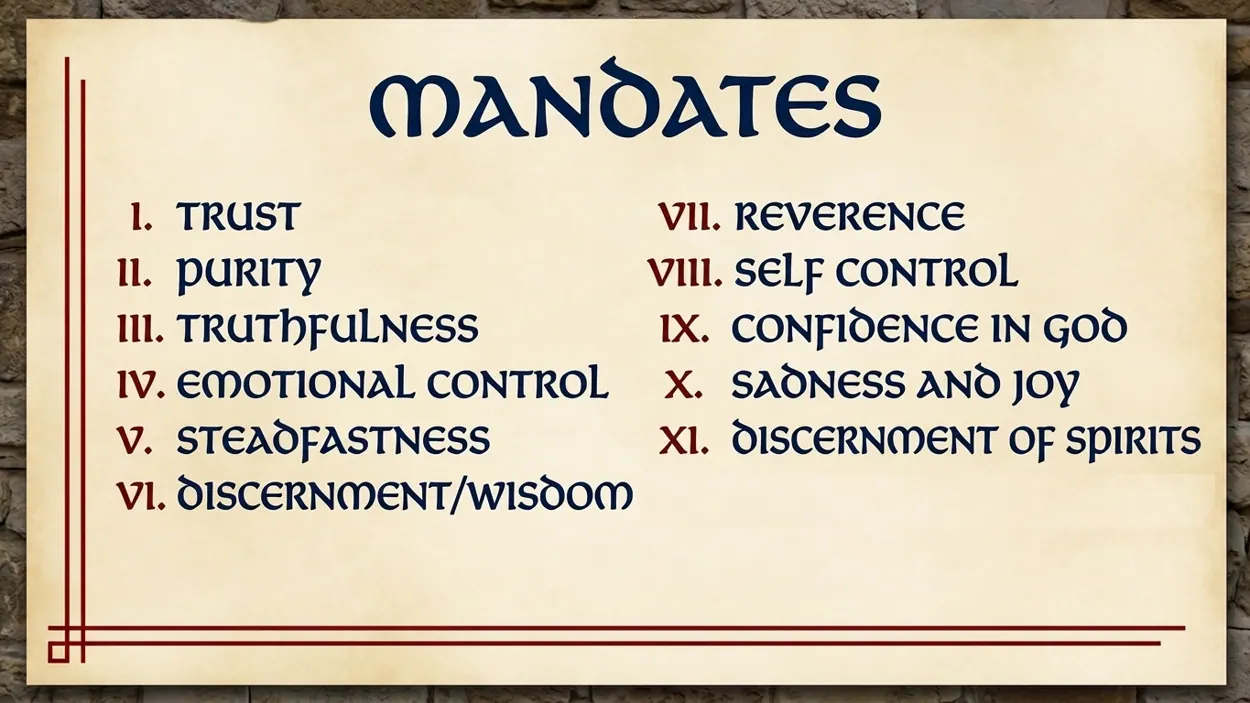
The Twelfth Commandment: Good and Evil Desires
VS-AUD-Nancy-Ch5h |
They reach the top of a hill overlooking the valley. The wind moves steadily across the grass, carrying the scent of earth and distant water. The shepherd stands tall, his staff planted firmly in the ground. The height of the hill makes the moment feel larger, as though the whole valley is listening.
“Every person,” he says, “has two desires within them — one good, one evil.”
Hermas feels the truth of it immediately. He has felt both desires pulling at him many times — one urging him toward generosity, patience, obedience; the other toward anger, pride, and old habits that never led anywhere good.
“The good desire leads to life,” the shepherd says. “The evil desire leads to destruction. You must choose which one you will feed.”
Hermas swallows hard. This commandment feels like the heart of everything — the center of the struggle inside every person, the crossroads where every choice begins.
The shepherd’s voice softens, but the weight of his words does not.
“Desire shapes destiny, Hermas. Feed the good, and you will grow strong. Feed the evil, and you will fall.”
Hermas nods slowly. “I will write it,” he says quietly.
The shepherd looks at him with deep kindness. “And you will live it. That is the greater work.”
Back in his home, Hermas steps inside to find his wife placing fresh rushes along the floor to keep the dust down. The faint scent of the reeds mixes with the warmth of the hearth. She glances at him, sees the seriousness in his expression, and gently sets the remaining rushes aside.
A clay jar of cool water sits on the table. She uncorks it and pours a small cup for him, then moves quietly to the doorway, giving him space without leaving the room entirely. She knows this mandate is heavier than the others — she can see it in the way Hermas carries himself.
The house feels grounded tonight, steady and simple, like a place where truth can settle without distraction.
Hermas sits at his table.
He takes out his parchment, the lamplight casting a warm circle across the surface. The shepherd’s words settle in him again — two desires, two paths, two outcomes.
Life or destruction.
Strength or collapse.
The choice of which desire to feed.
He must write now, while the hilltop wind still echoes in his ears, while the valley’s vastness still rests in his chest, while the shepherd’s kindness still steadies his heart.
Each stroke is deliberate. Each word carries the weight of vigilance, the weight of choice, the weight of what it means to feed the good desire with a whole heart.
Good desires grow. Evil desires consume.
The one you feed becomes the one you follow.
The twelfth mandate settles onto the page.
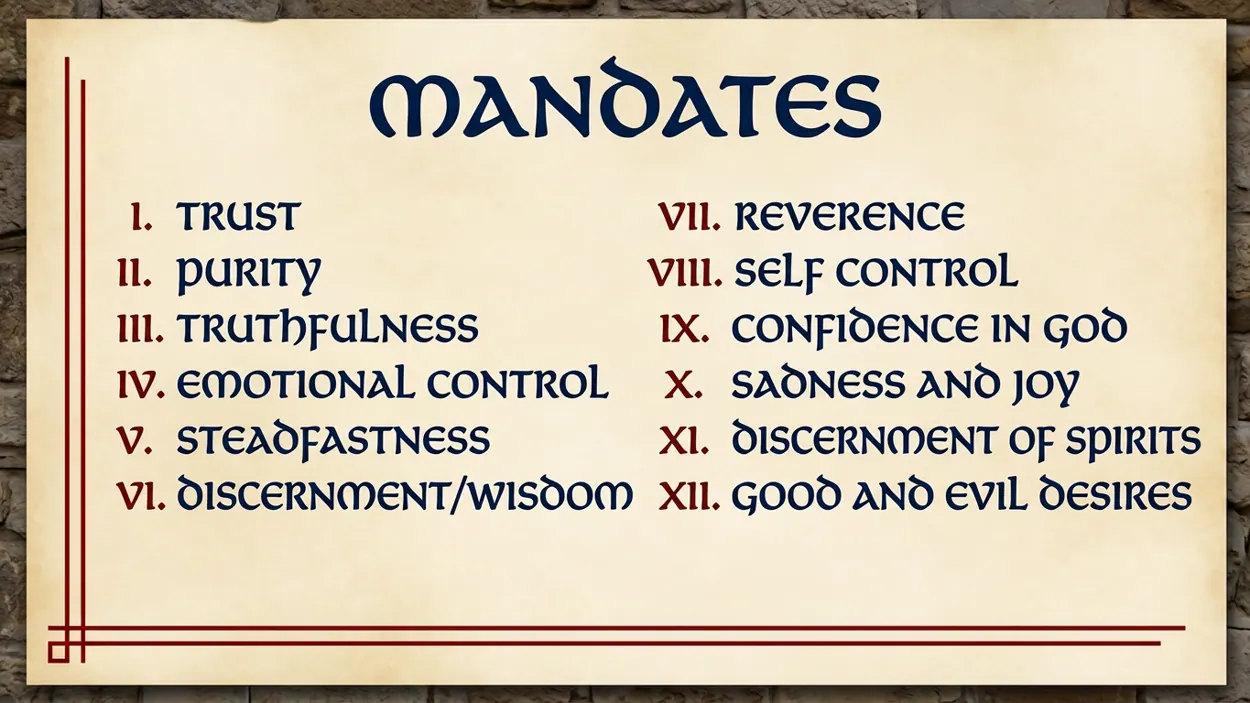
VS-Marcos-Ch5 |
Marcos of Antioch Notes That The Battle Moves Deeper | |
The first four command- ments focused on the foundations of the heart:
|
|
and controlling destructive anger. Now the Shepherd goes deeper. He speaks about steadfastness, discernment, reverence, self-control, confidence, joy, and finally the struggle between good and evil desires. Why? Because the greatest battles are rarely fought on a battlefield. They are fought inside a person. A person can know the truth and still drift away from it. A person can hear God's voice and still listen to the wrong voices. A person can fear God on Sunday and fear the world on Monday. A person can desire what is good and still feed what is evil. That is why these mandates read like a map of the human heart. Steadfastness teaches us to stay on the path. Discernment teaches us which voices to trust. Reverence teaches us who belongs on the throne. Self-control teaches us how to govern ourselves. Confidence in God teaches us how to overcome doubt. Joy teaches us how to endure hardship without losing hope. You must be able, with God's help, to be able to know when it is God's spirit speaking and when it is simply a human voice. Finally, . . . there is that constant struggle between good and evil desires. We must be sure to listen to the good and resist the evil. Every day we choose which desires will grow stronger. The tower is not built only from stones. It is built from choices. Small choices. Daily choices. Repeated choices. The kind nobody else sees. The Shepherd is teaching Hermas that before a person can help build God's tower, he must learn to govern the kingdom inside his own heart. Most people think their biggest enemy is somewhere out there. The Shepherd says otherwise. The real battle often begins much closer to home. Every day two wolves knock on the door of your heart, asking to be fed. The one you feed today will be stronger tomorrow. |