Chapter 6
Chapter 6 - Full | VS-AUD-Ch6-Full (24 min 6 sec) |
Lessons in the Field: Parables tell the Story
VS-AUD-Nancy-Ch6a |
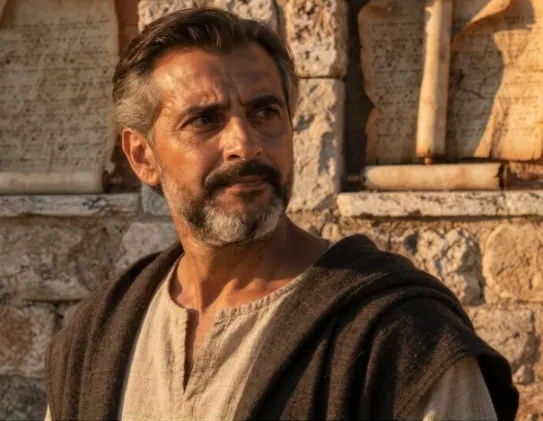
Hermas finished writing the last line of the twelfth commandment just as the sun dipped behind the hills. The sky glowed with a soft amber light, and the valley below seemed to hold its breath. He set down his stylus and rubbed his eyes. The commandments had been heavy, but good — each one shaping him, steadying him, strengthening him. His hand trembled slightly; he hadn’t noticed how hard he’d been gripping the stylus.
The shepherd stood nearby, watching him with a calm expression, though there was something in his eyes — a quiet fire, a knowing weight.
“You have done well,” he said.
Hermas exhaled slowly. “The commandments were harder than I expected.”
“They were meant to be,” the shepherd replied. “They prepare the heart. They prepare the church. They prepare YOU!. You can achieve them when you rely on God and not your own strength.”
A cool wind swept across the hillside, lifting the edges of the parchment. Hermas steadied the pages with his palm. Twelve commandments, each one a stone in the foundation of the tower he had seen in his visions. He felt the weight of them, but also a strange lightness, as though something inside him had settled into place — a stone finally fitted where it belonged.
“What comes next?” Hermas asked.
The shepherd stepped forward, his cloak catching the last light of the day. For a moment, the fading sun made him look almost otherworldly — not glowing, but outlined, as though the light itself respected him.
“Now,” he said, “you will learn the parables.”
Hermas felt a quiet shiver. The visions had been vivid. The commandments had been clear. But parables… parables were different. They were stories with hidden doors, symbols with living meaning. Stories that could comfort or cut, depending on how deeply one listened.
“The parables will show you what the commandments cannot,” the shepherd continued. “They will reveal the heart of God’s work — the building of the tower, the testing of the stones, the calling of the people.”
Hermas swallowed. “Are they difficult?”
The shepherd smiled gently. “Some are simple. Some are deep. One is very long.”
Hermas nodded. He already knew which one that must be. The tower had not left him since the first vision; it hovered in his thoughts like a half remembered dream.
“You will write them,” the shepherd said. “And you will understand them. Not all at once. But in time.”
Hermas felt a steady resolve rise within him. The commandments had shaped his character. The parables would shape his vision. He sensed that the path ahead would not merely teach him — it would test him.
“I am ready,” he said.
The shepherd lifted his staff and pointed toward the path leading into the valley. The shadows had grown long, and the first stars flickered in the deepening blue.
“Then come,” he said. “The first parable waits for you.”
Hermas gathered his pages, tied them carefully, and followed the shepherd down the path. The air cooled, the night deepened, and somewhere in the valley below, a single lantern flickered — as though someone already knew they were coming.
The journey was beginning again.
Similitude 1: The Branch and the Servants
VS-AUD-Nancy-Ch6b |
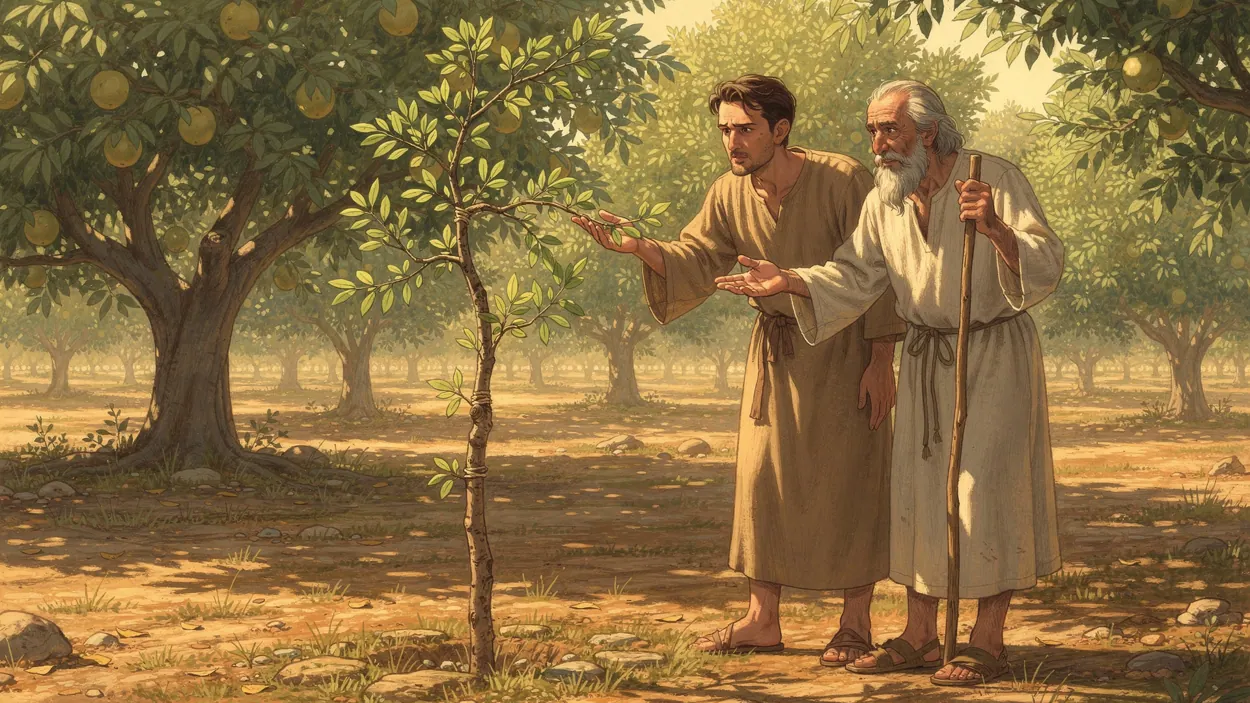
Hermas followed the shepherd into a quiet orchard where the trees stood tall and still, their leaves whispering softly in the morning air. The shepherd walked with purpose, yet without hurry, as though every step already knew where it belonged. They stopped beside a young tree whose trunk rose straight, but whose single branch had once sagged toward the earth.
The branch was tied upright with a simple cord—nothing elaborate, just enough to lift it back into place.
“Look,” the shepherd said.
Hermas stepped closer. The branch had clearly struggled. Its bark was rougher than the rest of the tree, and a faint scar marked where it had bent low. But now, held upright, it grew straight and strong, reaching toward the light like the other branches around it.
“This,” the shepherd said, “is what happens when a servant of God fails to obey, then repents and returns to obedience. He is lifted. He is strengthened. He grows straight again.”
Hermas touched the branch gently. It felt firm, alive, and warmer than he expected—as though the tree itself welcomed the correction.
The shepherd continued. “There are many little repentances along the way. Not only the great turning, when one first becomes a believer, but the small ones—quiet moments when a servant sees he has bent, even slightly, and chooses to rise again. Each one increases his character. Each one strengthens his life.”
Hermas looked around the orchard. Some branches were perfectly straight. Others leaned a little. A few were tied upright like the one before him. He wondered how many servants walked with hidden cords—small corrections, quiet restorations, unseen but essential.
“Write this,” the shepherd said. “Many will need to know that repentance restores. And many will need to understand that growth comes through these small turnings, again and again.”
And then the shepherd added, his voice low and warm, “Hermas, remember this: the cord is never shame. It is mercy. Every time God lifts a servant upright, He is not exposing the failure—He is protecting his future. A bent branch can still bear fruit. A scarred branch can still reach the light. What matters is not how far a servant has bent, but how quickly he lets himself be lifted.”
Hermas felt the words settle into him like sunlight warming the bark of the tree. He pondered:
What matters is not how often you fall;
but how many times you rise up again;
Just be sure you always rise up;
You cannot grow if you are still on the ground!
The shepherd stepped back and looked over the orchard. “Tell them this,” he said. “Tell them that repentance is not the story of falling—repentance is the story of rising again . And the ones who rise often, become the strongest.”
Hermas breathed in the quiet air of the orchard. The parables had begun.
Similitude 2: The Elm and the Vine
VS-AUD-Nancy-Ch6c |
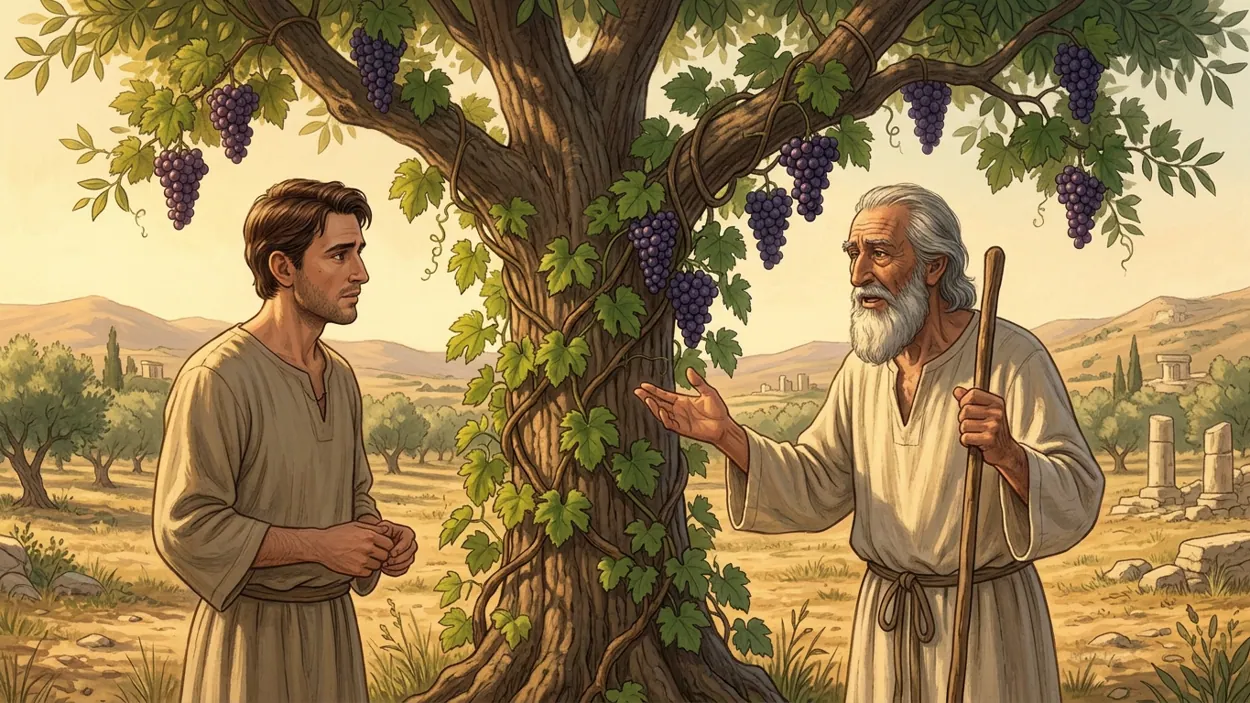
They walked to a field where an elm tree stood beside a vine. The vine wrapped itself around the elm, climbing upward, bearing fruit.
“The elm cannot bear fruit,” the shepherd said. “But it supports the vine.”
Hermas watched the vine cling to the elm, rising higher than it could alone.
“So it is with the rich and the poor,” the shepherd continued. “The rich support the poor. The poor bless the rich. Together they bear fruit. Each one needs the other. Remember that if God blesses you by making you rich in this world. Do not forget the poor.”
Hermas felt the truth settle deeply. Strength and need were meant to work together.
“I will write it,” he said.
“Good,” the shepherd replied. “Unity builds the tower.”
Hermas lingered a moment longer, watching the vine and the elm breathe in the same wind. The shepherd’s words pressed into him with gentle weight — not a burden, but a calling.
He felt the truth settle into him like sunlight warming the bark of the tree.
Then he realized:
You rise higher when you lift another;
You grow stronger when you share your strength;
You bear fruit when you bless another;
The Tower isn't built by one alone.
The shepherd then affirmed, "Remember the Proverb in Scripture that says "
Two are better than one . . . " and
"Iron sharpens iron, so one man sharpens another ."
Similitude 3: The Tower and the Stones
VS-AUD-Nancy-Ch6d |
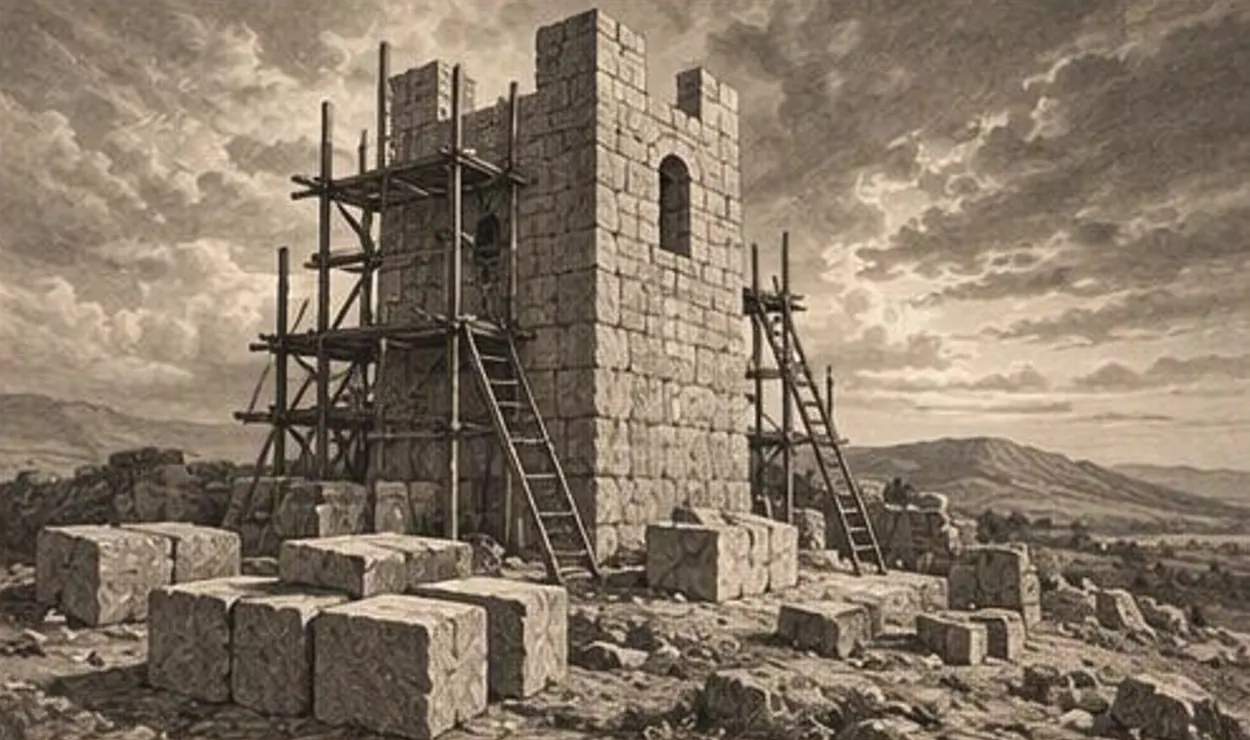
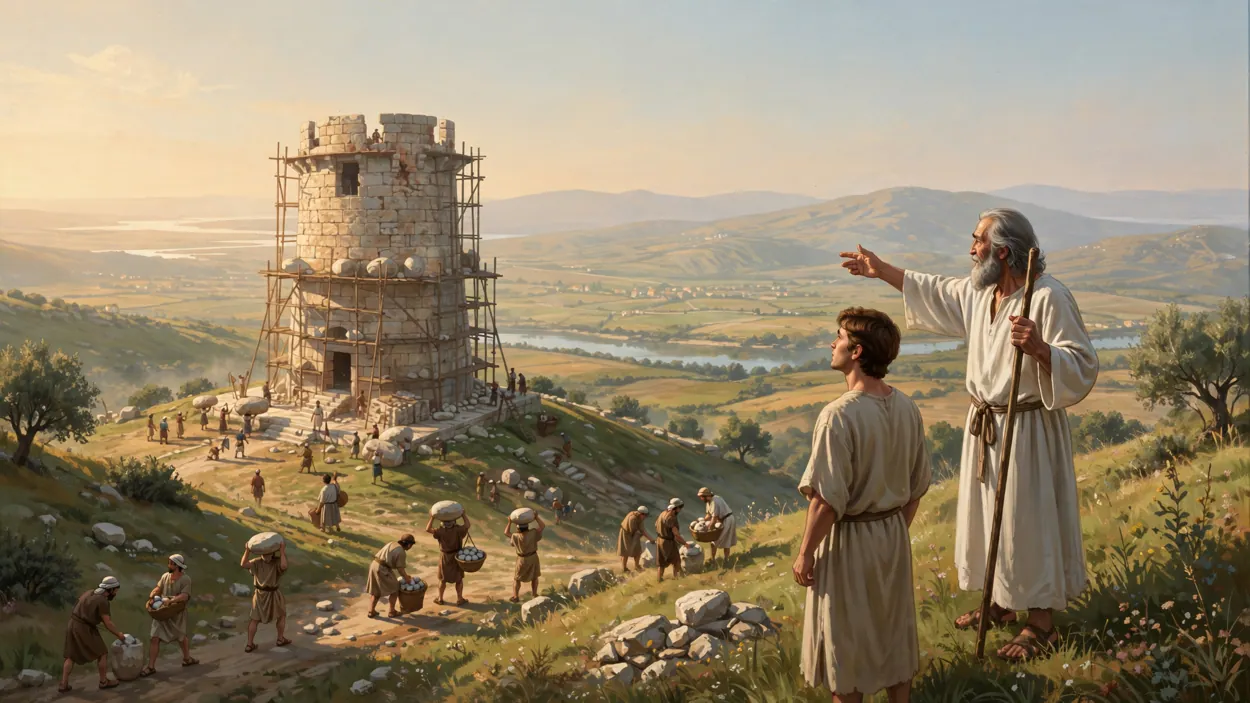
They came to a rise overlooking the valley. There, Hermas saw the tower again — the same tower from his visions, rising stone by stone. Morning light touched its edges, making the unfinished structure glow as though the work itself were alive.
“The tower is the Church,” the shepherd said. “Every stone is a believer.”
Hermas watched workers carry stones — some smooth, some cracked, some rejected. The workers moved with careful attention, testing each stone, turning it in their hands, examining its weight and shape. “Only the stones that fit built it strong,” the shepherd said. “Only the faithful give the tower strength.”
Hermas felt a familiar ache. He wanted to be a stone that fit — not perfect, but placed; not flawless, but faithful. He wondered how many stones had once been cracked, then restored; how many had been shaped through pressure, trimmed through hardship, strengthened through obedience.
“You will write this,” the shepherd said. “The Church must understand what God is building.”
Hermas nodded. The tower stood tall in his mind — not just a structure, but a calling. A place where every life mattered, every obedience counted, every act of faith became part of something larger than itself.
The shepherd stepped closer to him. “Hermas, remember: God does not discard stones because they are scarred. He discards stones because they refuse to be shaped.”
Hermas breathed in the valley air. The tower seemed to rise higher as he watched, each stone finding its place, each placement strengthening the whole.
Then the thought came to him:
You are shaped to be set;
You are set to help others;
Your strength for the tower;
Makes the tower strong.
The shepherd then reminded Hermas, "The proverbs are your guide to wisdom:
'Kindness to the poor is a loan to the Lord,
and he will give a reward to the lender .'"
Hermas felt the truth settle into him like the weight of a stone placed perfectly in the wall — secure, purposeful, and ready for the next one to be set beside it.
Similitude 4: The Seasons of the Heart
VS-AUD-Nancy-Ch6e |
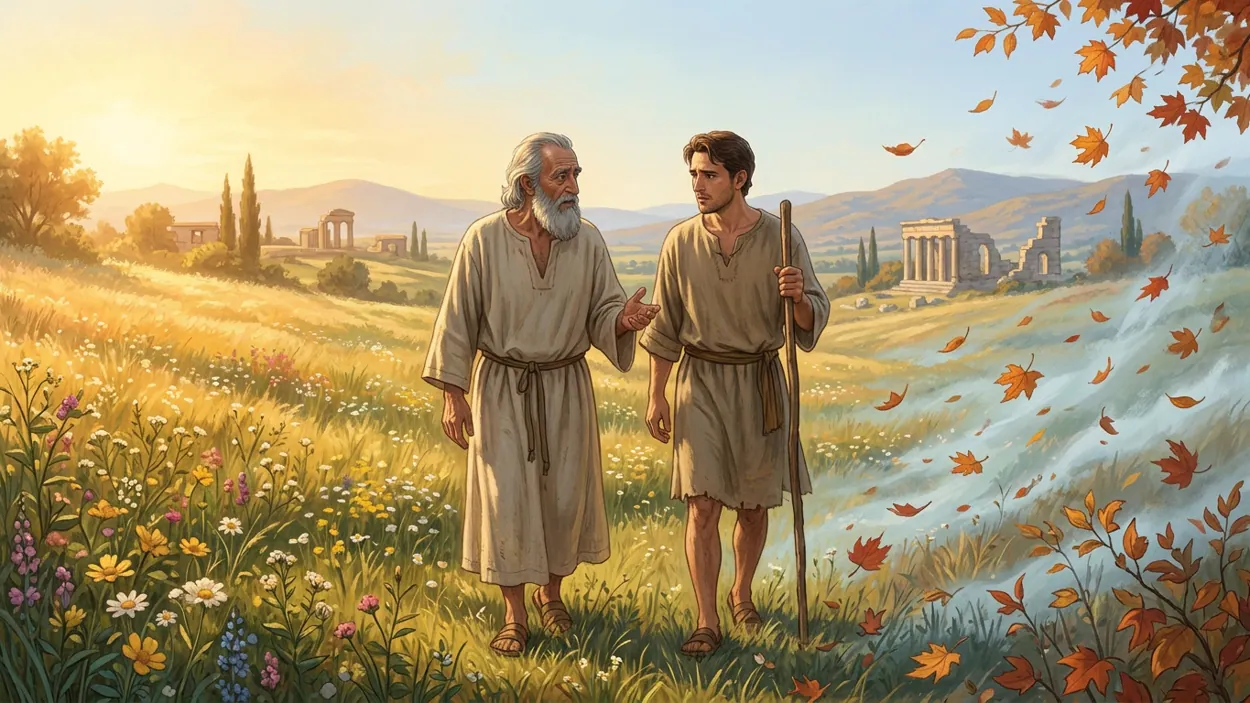
They walked through a meadow where the seasons seemed to shift in the air — warm sunlight, cool breeze, drifting leaves. The ground itself seemed to breathe, as though every blade of grass remembered spring and every fallen leaf remembered autumn.
“The heart has seasons,” the shepherd said. “Some are fruitful. Some are barren.”
Hermas felt the truth of it. He had known seasons of strength, when obedience came easily and joy rose like morning light. And he had known seasons of weakness, when his heart felt thin and cold, and even simple faith seemed heavy.
“But God watches every season,” the shepherd continued. “And He restores those who stay with Him even in winter.”
Hermas breathed deeply. The meadow felt like a living parable — a reminder that nothing stays barren forever, and no winter lasts without end.
“I will write it,” he said.
“Write it with hope,” the shepherd said. “Many believe their winter will never break. They must know that God brings spring. God does not change but the seasons do!”
Hermas looked across the meadow. A single green shoot pushed through the soil near his feet — small, fragile, but unmistakably alive. It was enough to make him believe the shepherd’s words.
Then the thought came to him:
Your heart will have winters;
Your faith may be cold;
Your strength maybe fade;
But the seasons will change
when you still trust in God.
The shepherd then reminded Hermas, “Even King David had his times of despair but cried out in the Psalms,
“My flesh and my heart fail,
but God is the strength of my heart.”
Hermas felt the truth settle into him like the first warm day after a long winter — gentle, steady, and full of promise.
Similitude 5: The Servant and the Master’s Vineyard
VS-AUD-Nancy-Ch6f |
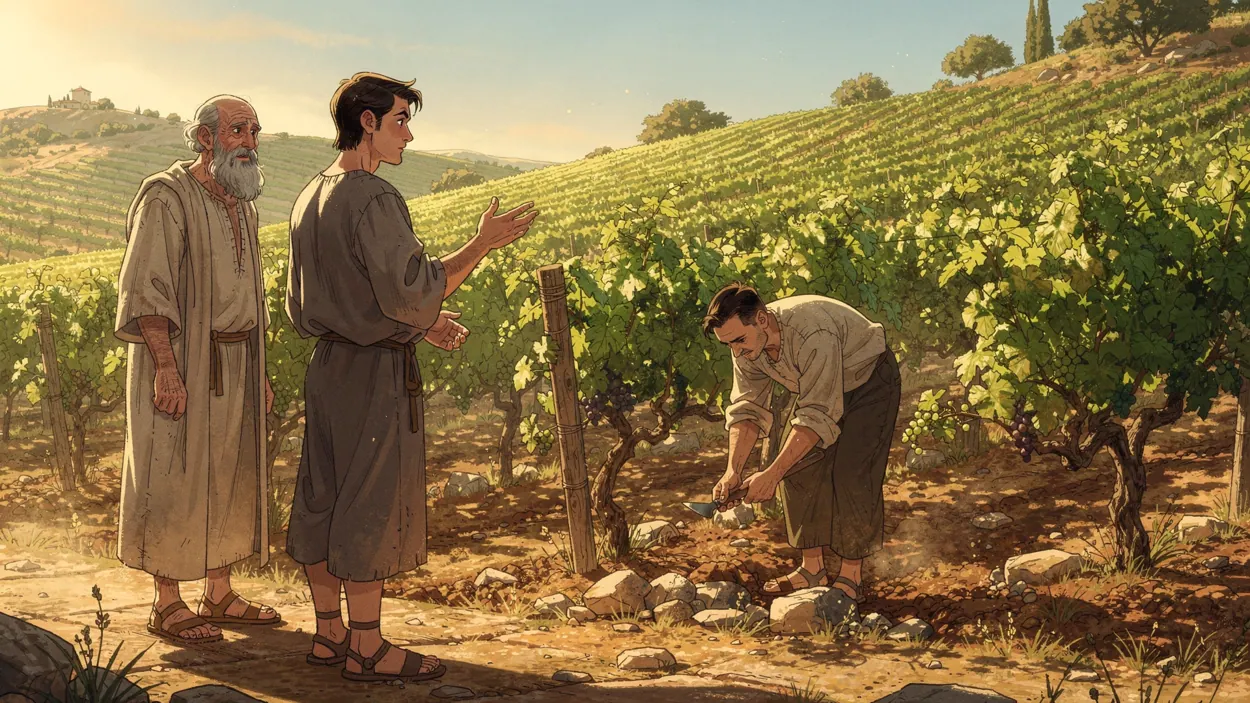
They reached a vineyard where a servant worked tirelessly, pruning vines, clearing stones, tending the soil. His hands were rough, his clothes dusty, but his movements were steady and sure. Every cut of the pruning knife had intention. Every stone he lifted had purpose. Every step carried quiet devotion.
“The servant works faithfully,” the shepherd said. “And the master rewards him.”
Hermas watched the servant’s diligence. The sun beat down, yet he did not slow. The wind shifted, yet he did not pause. His labor was not frantic — it was faithful. Steady. Patient. The kind of work that yields fruit over time.
“So it is with those who serve God,” the shepherd continued. “Faithfulness brings blessing.”
Hermas nodded. “I will write it plainly.”
“Plain truth is powerful,” the shepherd replied. “Many want reward without labor. But fruit grows only where hands stay faithful.”
Hermas looked again at the servant. Sweat on his brow. Dirt on his arms. Determination in his eyes. And yet — joy. A quiet joy that came from knowing his work mattered.
Then the thought came to him:
Faithfulness is slow work;
Obedience is steady work;
Blessings from patient work;
Then God brings reward.
The shepherd then nudged Hermas, “Hard, steady work is good. Have you not read in the scriptures: ‘Work brings profit, but mere talk leads to poverty.’ So be diligent in your work, as if it is for God . . . because it is! ”
Hermas felt the truth settle into him like the warmth of the vineyard sun — steady, strengthening, and full of promise.
Similitude 6: The Two Angels
VS-AUD-Nancy-Ch6g |
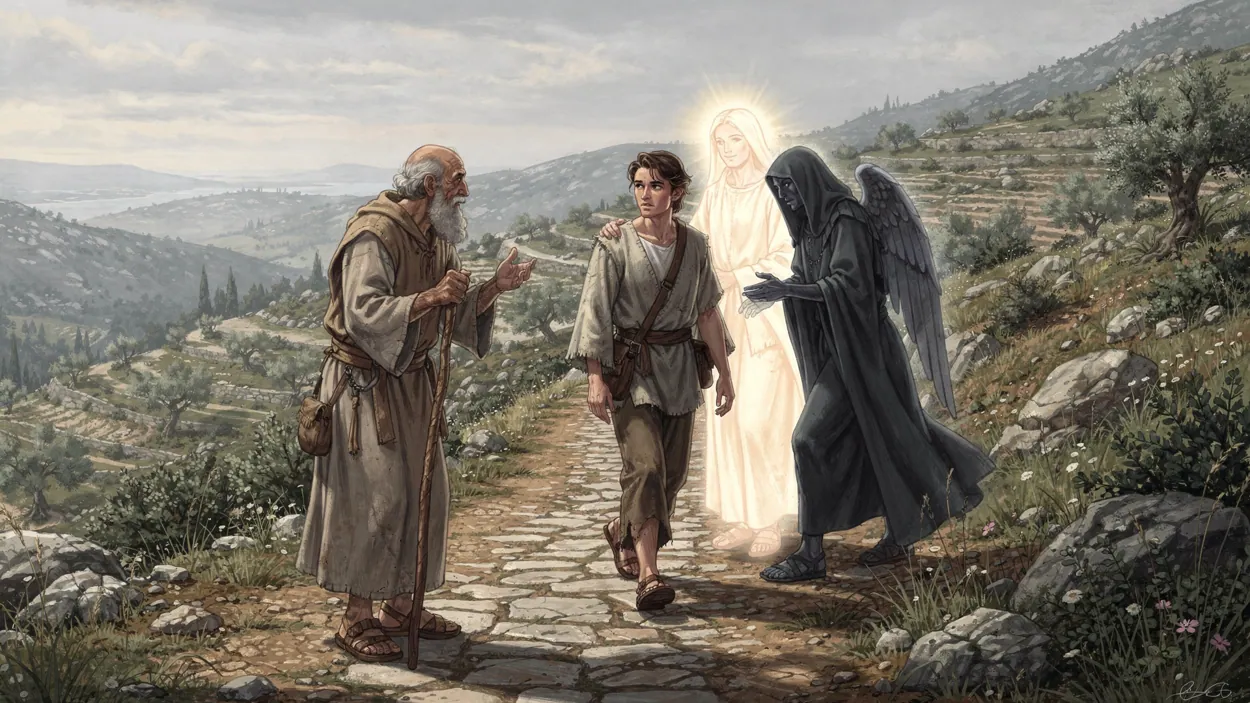
They walked along a narrow path. The shepherd spoke quietly, as though the air itself needed to listen.
“Every person is accompanied by two angels — one of righteousness, one of wickedness. The Apostle said there is in you an Old Man and a New Man.”
Hermas felt a chill. He had sensed these pulls within himself — the tug toward obedience, the whisper toward disobedience. Some days the voices were faint. Other days they felt like a storm inside his chest.
“You must listen to the angel of righteousness, the new man,” the shepherd said. “And silence the other, the old man.”
Hermas nodded slowly. He knew the old man well — the habits, the impulses, the shadows that clung to him. And he knew the new man too — the quiet strength, the gentle conviction, the growing desire to walk uprightly.
“I will write this carefully,” Hermas said.
“Good,” the shepherd replied. “Many struggle with these voices. They must know which one to obey.”
They reached a bend in the path where two trails split — one bright, one dim. Hermas paused. The shepherd watched him without speaking. The moment itself felt like a parable.
Then the thought came to him:
Two voices call you;
Two paths to decide;
Two natures pull you;
Only one leads to God.
The shepherd then affirmed, “And remember the proverb in Scripture: ‘The path of the righteous is like the morning light, shining brighter and brighter.’ Follow that path, Hermas. The old man walks in shadows. The new man walks in rising light.”
Hermas felt the truth settle into him like dawn breaking over the narrow path — steady, bright, and unmistakably new.
Similitude 7: The Servant Tested
VS-AUD-Nancy-Ch6h |
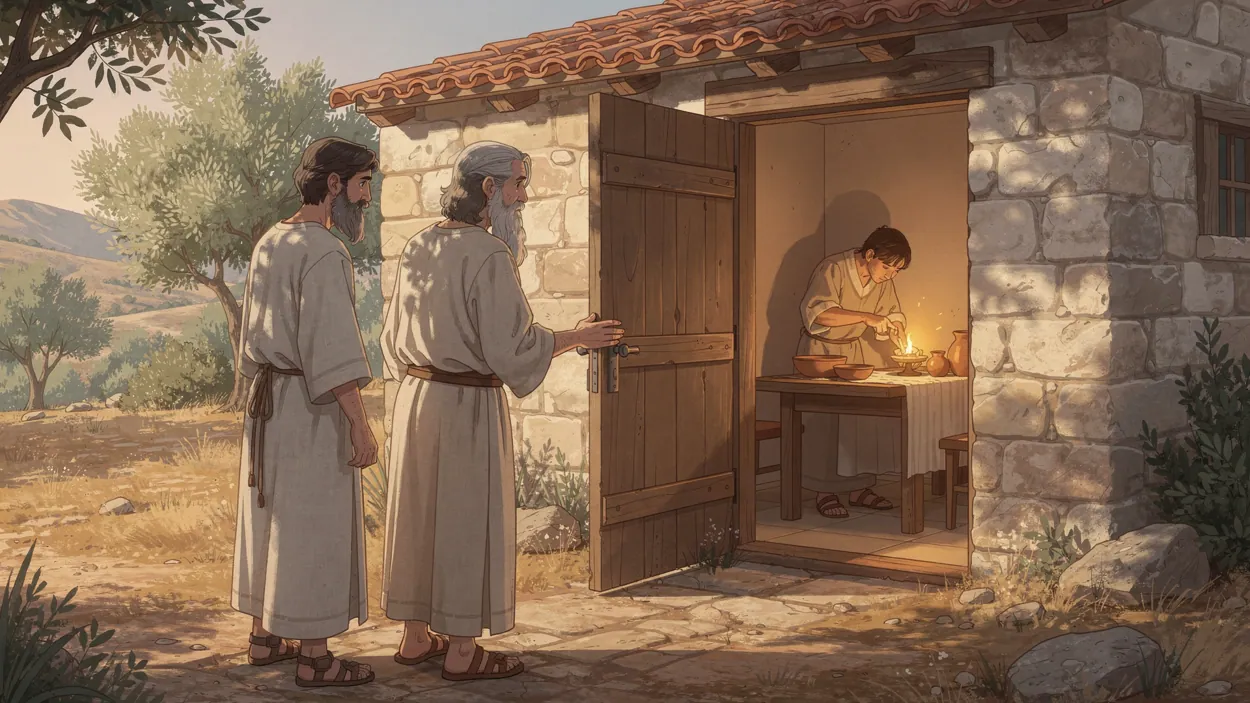
They came to a small house where a servant waited for his master’s return. The servant kept the house clean, the lamps trimmed, the table ready. Every movement was quiet, deliberate, and faithful — not rushed, not careless, simply steady.
“The servant is being tested,” the shepherd said. “Not by hardship, but by waiting.”
Hermas watched the servant adjust a lamp wick, smooth the tablecloth, and sweep a corner that was already clean. There was no audience, no applause, no reward — only the quiet discipline of readiness.
Hermas understood. Waiting revealed the heart. Hardship exposes strength, but waiting exposes loyalty.
“When the master returns,” the shepherd continued, “he rewards the faithful servant.”
Hermas nodded. “I will write it.”
“And you will live it,” the shepherd replied.
They stood in the doorway for a moment. The servant glanced toward the road — not anxiously, but expectantly — then returned to his work. His faithfulness was not loud; it was patient.
Hermas felt the weight of the lesson settle into him. Waiting was not empty time. Waiting was obedience stretched across days.
The shepherd's words formed a new verse for Hermas:
Waiting tests your heart;
Waiting shapes your loyalty;
Waiting reveals your faith;
Waiting leads to great rewards.
The shepherd then affirmed, “And remember the proverb in Scripture: ‘Work hard and become a leader; be lazy and become a slave.’ Faithful waiting is diligent work, Hermas — and God honors those who do not drift while the answers delay.”
Hermas felt the truth settle into him like a lamp newly lit — steady, warm, and ready for the master’s return.
.
Similitude 8: The Willow and the Branches
VS-AUD-Nancy-Ch6i |
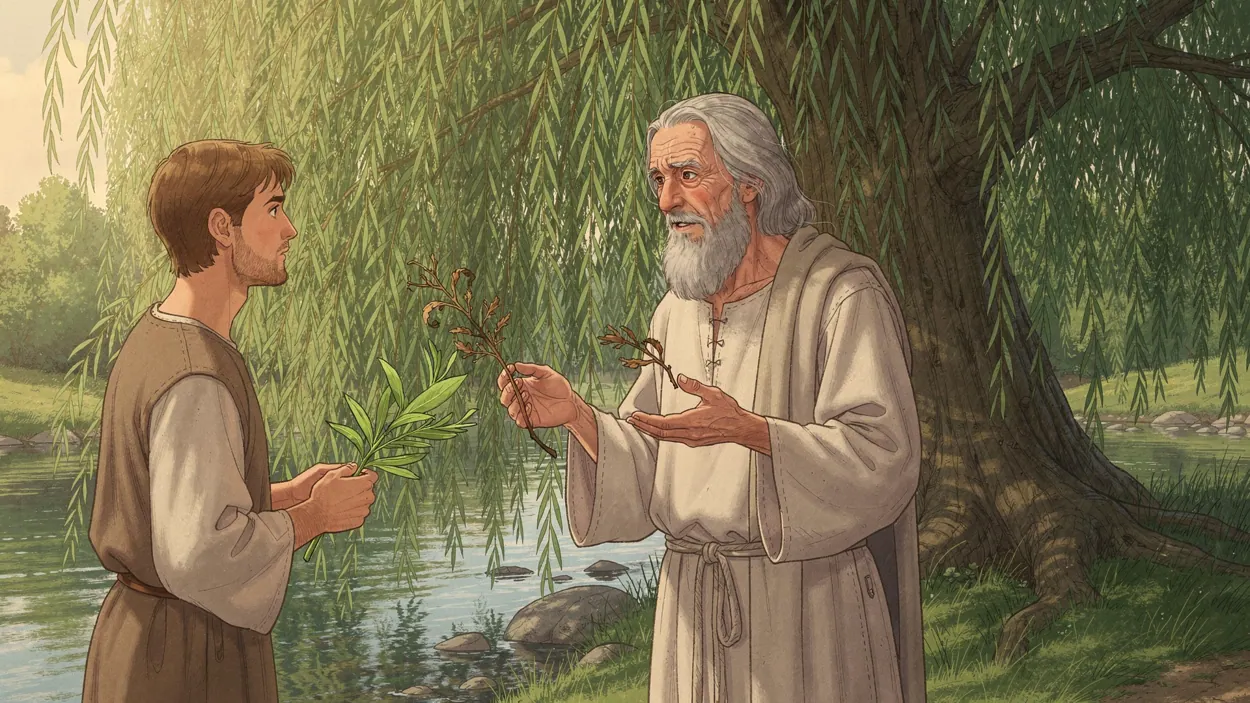
They reached a great willow tree beside a stream. Its branches hung low, touching the water, swaying gently as though whispering secrets to the flowing current. The air beneath the tree was cool, shaded, and alive with the quiet sound of leaves brushing the surface of the stream.
“Break a branch,” the shepherd said.
Hermas reached for one of the long, green tendrils and snapped it. The branch bent easily, but even in his hand it remained supple, alive, full of moisture drawn from the tree’s deep roots.
“Now break another,” the shepherd said.
Hermas chose a branch that had already fallen to the ground — dry, brittle, separated from the tree. When he snapped it, it cracked sharply and crumbled in his fingers.
“The willow is the Church,” the shepherd said. “Those who remain connected live. Those who break away wither.”
Hermas felt the weight of it. The difference between the two branches was unmistakable — one alive because it remained attached, the other dead because it had separated itself.
“Many think they can live apart,” the shepherd continued. “But no one thrives alone. The stream feeds the roots. The roots feed the branches. The branches feed the leaves. And the leaves give shade to others.”
Hermas nodded slowly. “I will write this one with care.”
“Write it with urgency,” the shepherd said. “Time is short. Many are drifting. They must know that life comes from staying connected.”
Hermas looked again at the willow — its roots deep, its branches many, its life shared. The truth was simple, but sharp.
Then he paused and thought for a moment . . . deeply:
Connection gives life;
Separation brings dryness;
Community strengthens;
God breathes life to the branches.
The shepherd then affirmed, “And remember the Scripture in the Psalms: ‘I will praise the Lord in the assembly of the upright.’ Stay rooted, Hermas. Those who remain in God’s house remain strong.”
Hermas recognized this truth before the Shepherd actually explained it. He was almost prideful that he anticipated the Shepherd on this one . . . almost prideful . . . but he remembered that pride is also a sin.
VS-Marcos-Ch6 |
Marcos of Antioch Points to the Common Theme | |
At first, the parables seem unrelated. A bent branch. A vine climbing an elm. Stones in a tower. Changing seasons. A vineyard |
|
worker. Two angels. A waiting servant. A willow tree beside a stream. They have different places; Different people; Different lessons. But look again! The Shepherd is telling the same story over and over. Not the story of buildings. . . . Not the story of trees. . . . Not the story of servants. But, the story of growth. The bent branch grows straight again. The vine grows because it is supported. The stones grow into a tower. Winter grows into spring. The vineyard grows through faithful labor. The new man grows stronger than the old. The waiting servant grows through patience. The willow branches grow because they remain connected. They are all different pictures. . . . But One message. God is always trying to grow something. That is why the Shepherd takes Hermas into these various settings. Everywhere Hermas looks, creation is teaching the same lesson. Nothing healthy grows instantly. Trees grow slowly. Vineyards grow slowly. Character grows slowly. Faith grows slowly. Even towers are built one stone at a time. We live in a world that wants everything immediately. The Shepherd describes a world where almost everything important takes time. One act of obedience. One act of repentance. One faithful decision. One more day of waiting. One more season of trusting. And before you realize it, God has built something strong. The tower was never built in a day. . . . Neither are you. When God wants to teach Hermas, He doesn't take him into a classroom. He takes him outside. Suddenly the whole world becomes a lesson. Maybe that's the point. Perhaps God filled creation with pictures because He knew His children would need reminders everywhere they looked. The next time you see a growing tree, remember this: God is just as patient with you as He is with the tree. |