Introduction
The "Made Simple" Book Series
This book is one of a series of books titled "[Subject Matter] Made Simple." Its purpose is to take a complex subject, in theology, politics, history, economics and similar subjects and make the complex simple to understand to the average laymen in the subject. A key feature to the Made Simple series is that each book has an artificial intelligence created character who acts as a guide through the subject, making appropriate (and sometimes inappropriate) comments, or explanations at strategic points in each chapter.
Because this work is a novel rather than a study guide, its title intentionally departs from the familiar "[Subject Matter] Made Simple" format. Instead of signaling an academic exploration, the title is meant to spark the imagination and invite the reader into a story. The pages that follow are not designed primarily for analysis, but for experience. Like a traveler strolling an unfamiliar path, the reader is invited to walk beside Hermas and Marcos (and eventually the Shepherd) through visions, parables, struggles, and discoveries that have challenged and inspired believers for nearly two thousand years. By presenting this ancient "Book of Virtues" as a narrative, the goal is to allow its lessons to be encountered naturally through the lives of its characters, making a second-century Christian classic live again for twenty-first-century readers.
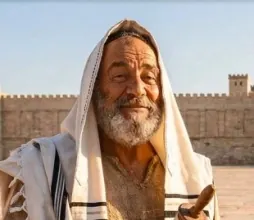
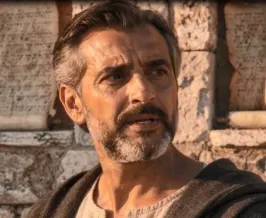
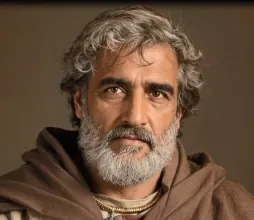
Some of the characters already developed for books in the "Made Simple" series, with more to come, are Shlomo - my Hebrew expert from the first century, Marcos of Antioch - a convert of the Apostle Paul, my guide in early church history from the first century on, Eusebius - my theologian and historian from the 4th century, Joe Liberty - an Average Joe from the 21st Century who is my economic guide, and Patriot Henry from 1776 - my guide to the US Constitution and Federalist Papers. Each one adds his own unique input to the book.
Meet Some of My Guides | |||
|
|
|
|
Shlomo | Marcos of Antioch | Eusebius | Joe Liberty |

A brief note about tools: Parts of this book were drafted with the assistance of artificial intelligence — which means I occasionally had to referee arguments among my own guide characters about who deserved credit. Shlomo insisted the best lines were obviously his. Average Joe Liberty claimed he asked all the important questions. Patriot Henry declared the whole project a triumph of freedom. Marcus of Antioch quietly reminded everyone that he was quoting sources before it was cool. Eusebius reminded them that the Council of Nicea in 325 AD was not all that orderly all the time, either!
Meanwhile, the AI just sits there politely, waiting for me to finish laughing.
So let the record show: I am the author. The ideas, explanations, illustrations, and doctrinal positions are mine. AI simply helped me write faster — it didn’t think for me. In fact, whenever the AI program offered any new information, I double checked it against the actual sources which I either have in my personal library or could find original documents online. So, none of the content of this book is "original" from the AI program. All original content is from me and/or verified by me from primary sources. Any mistakes that remain belong to me, not to Shlomo, Joe, Henry, Marcus, Eusebius, or the AI machine.
Preface
Listen to the Preface — Nancy Narrator (5 min 56 sec)
Many readers will remember The Book of Virtues, the influential 1993 anthology edited by William J. Bennett, former United States Secretary of Education. The book became a modern classic because it recognized a timeless truth: people are often shaped more effectively by stories than by lectures. Through narratives drawn from history, literature, legend, and faith, Bennett sought to cultivate character, encouraging readers to embrace virtues such as courage, honesty, perseverance, responsibility, compassion, and faith. Its message was straightforward but profound: a healthy culture depends upon virtuous people, and virtuous people are often formed through memorable stories. [en.wikipedia.org], [books.google.com]
Yet The Book of Virtues was not the first book dedicated to the formation of virtue. Nearly eighteen centuries before Bennett's work appeared, Christians throughout the Roman world treasured another book that pursued a remarkably similar purpose. That book was The Shepherd of Hermas. Written during the second century AD and widely read by believers of the early church, it employed visions, allegories, parables, and conversations to teach repentance, faithfulness, humility, self-discipline, perseverance, obedience, and devotion to God. While separated by centuries, cultures, and languages, both books share a common conviction: societies are elevated when individuals pursue virtue, and virtue is often best learned through stories.
This novel is therefore based upon a "Book of Virtues" that predates Bennett's celebrated volume by nearly eighteen hundred years. It draws its inspiration from The Shepherd of Hermas, preserving the structure, themes, symbolism, and spiritual lessons of that ancient Christian work while presenting them in a form accessible to modern readers. The goal is not simply to study an early Christian text, but to enter its world, walk its roads, encounter its mysteries, and experience its message through story.
In a sense, this book seeks to bring a second-century Christian classic to life for twenty-first-century believers. Just as Bennett gathered stories to encourage virtue within modern society, The Shepherd of Hermas sought to strengthen the character and faithfulness of the early church. The challenges may differ from age to age, but the need remains the same. Every generation must learn anew the values that sustain both a righteous community and a faithful life before God.
The inspiration for The Shepherd and the Visions comes from The Shepherd of Hermas. Although it was ultimately not included in the New Testament canon, it was deeply respected by many early Christians and circulated widely throughout the ancient church. The work presents a series of divine visions, moral teachings, and symbolic parables delivered to a Christian named Hermas through heavenly messengers.
The purpose of this novel is not to reproduce The Shepherd of Hermas word for word. Rather, it seeks to preserve its essential message while transforming its visionary framework into a historical narrative. Where the original text often speaks in symbolic and instructional forms, this adaptation imagines the people, places, conversations, and experiences surrounding those events. The result is neither a translation nor a commentary, but a literary retelling grounded in one of Christianity's most remarkable early writings.
To guide readers through this world, the story introduces Marcos of Antioch.
Marcos serves as interpreter, teacher, and fellow traveler. While Hermas experiences the visions and revelations, Marcos helps explore their meaning. He asks the questions many modern readers might ask. He provides historical perspective, theological reflection, and practical insight into the struggles faced by Christians living in the generations immediately following the apostles. Through his commentary, ancient lessons become more accessible without losing their original depth.
The historical setting of the novel reflects the Christian world of the second century AD, a time when the church was expanding throughout the Roman Empire while learning how to remain faithful in a complex and often hostile society. Questions concerning repentance, spiritual growth, obedience, purity, leadership, suffering, and perseverance occupied the minds of many believers. These same concerns form the backdrop of The Shepherd of Hermas and remain surprisingly relevant today.
Readers familiar with the original work will recognize many of its unforgettable images: the mysterious Lady Church, the great tower under construction, the shepherd, the stones, the beasts, the mountains, and the many symbolic lessons that unfold throughout Hermas's journey. Readers encountering these themes for the first time are invited to experience them as living realities within the story before considering their deeper meanings.
This book is offered as a bridge across eighteen centuries, linking the wisdom of the early church with the challenges of the modern Christian life. If Bennett's Book of Virtues helped countless readers rediscover the importance of character through story, it is my hope that this adaptation of The Shepherd of Hermas will do something similar by allowing one of Christianity's earliest "books of virtues" to speak again to a new generation.
Welcome to the journey.
The Shepherd is waiting.
Paul Lorenzen
Nampa, Idaho
October 16, 2026
BRIEF BACKGROUND
VS-AUD-Nancy-Background (1 min) |
The Shepherd of Hermas is an early Christian book written in Rome around AD 140–155. It tells the story of a man named Hermas who receives visions, commandments, and parables from an angelic shepherd sent to guide him and call the church back to faithful obedience. In the ancient world it became one of the most beloved Christian writings because it offered hope, practical guidance, and vivid imagery that helped ordinary believers understand how to live faithfully in difficult times. This novel is intended to bring the ancient story to the 21st century church in an entertaining format, making the popular 2nd century story available for youth and adults in the church today.
This book is illustrated and has links to videos in the context with Marcos of Antioch, an AI generated "Guide" who adds commentary and explains further, giving entertaining and informative input.
Prologue: The Gift and the Walk
VS-AUD-Nancy-Prologue (1 min 38 sec) |
Salvation is the free gift of God — given by grace, received through faith, and never earned by human effort. As the Apostle writes, “By grace you have been saved through faith… not of works, lest anyone should boast.” Yet he continues immediately, “For we are His workmanship, created in Christ Jesus for good works, which God prepared beforehand that we should walk in them.”
This novel stands firmly on that foundation. Nothing in these pages describes how a person becomes saved, nor how one earns or maintains salvation. Rather, the story explores the walk that follows the gift — the shaping of a life already redeemed. In other words, it deals with learning to be a "disciple" not simply a "convert" to Christianity.
The ancient Shepherd of Hermas, though written in a different era and with different emphases, speaks repeatedly to the inner formation of believers: the habits, disciplines, choices, and transformations that mark the life of someone who already belongs to God.
In this novel, those themes are reframed through the lens of Ephesians 2:10 — not as conditions for salvation, but as the outworking of salvation, the lived expression of grace. Readers should therefore approach this story as a guide to the "good works prepared beforehand" for the redeemed, a narrative exploration of how one learns to walk in the life God has already given.
Meet Your Guide: Marcos of Antioch
VS-AUD-Guide (41 sec) |
As you begin this journey, remember that this novel is based on The Shepherd of Hermas, which is part of a vital collection of early Christian writings known as the Apostolic Fathers. Marcos of Antioch is the AI Generated "Guide" in each of the books in the "Made Simple" series covering the various documents in the Apostolic Fathers collection.
As the guide through all of the Apostolic Father books, it is natural to have him be your guide and mentor for this novel.
To help set the stage, watch Marcos's personal introduction below to the entire Apostolic Father series.
VS-Marcos-Introduction |
Marcos of Antioch Introduces himself | |
These men wrote in the common Greek of our streets and marketplaces, bridg- ing the gap between sacred truth and the |
|
wider world. Having heard the Apostle Paul preach in my own city, I saw firsthand how our faith speaks to both the heart of Jerusalem and the mind of the Greek world. The letters of these Fathers reached every corner of the empire, sustaining the faith through the generations. Join me as we explore these vital insights and the living faith they preserved for us. Let us begin. |